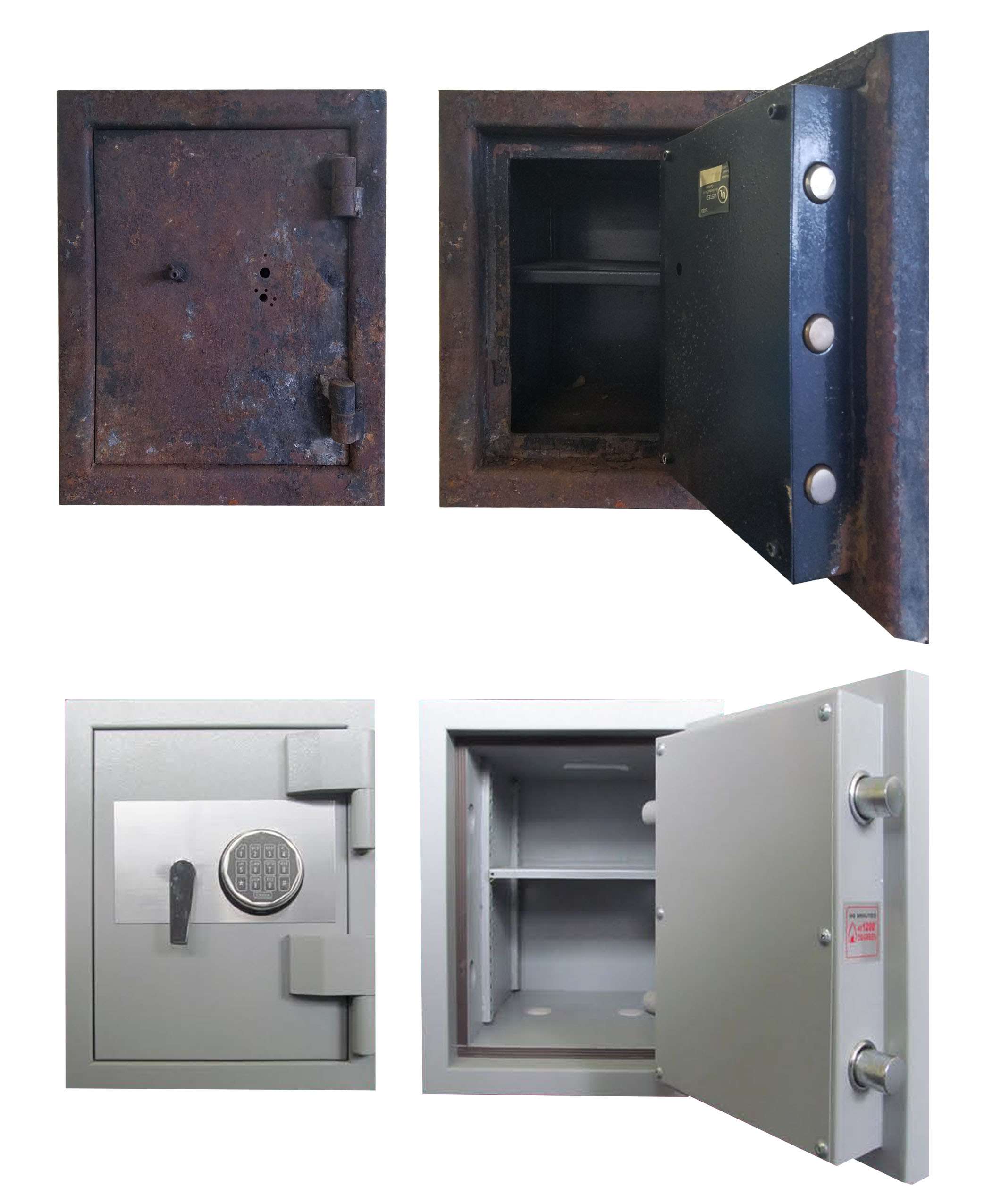
A fire rating is a measure of temperature and time, not a promise that a safe is fireproof. For most homes and businesses, one hour of fire protection is a practical baseline, and higher-quality safes are tested to more demanding standards. Understanding the details can be the difference between protection and loss.
Not all fire ratings are equal
Many safes are labeled fire rated, but what sits behind the label varies a great deal. A proper fire rating rests on two factors:
- Temperature exposure (how hot the fire gets)
- Duration (how long the safe protects its contents)
Fires can burn longer and hotter than expected, and lower-rated safes may not hold up in real conditions. Look closely at the testing standard, too. Some entry-level safes advertise one or two hours but were tested at lower internal or external temperatures. Higher-quality safes are tested to more demanding standards, often exceeding 1,800 degrees Fahrenheit, to simulate more severe fires.
Fireproof is not a real standard
Despite how it is marketed, no safe is truly fireproof. All fire protection is measured by time and temperature resistance. A safe is designed to protect its contents for a defined period under specific conditions, not indefinitely. Knowing that helps you choose a safe that matches the risk you are actually protecting against.
Fire protection versus burglary protection
A fire-rated safe does not automatically provide strong burglary protection. They are two different jobs:
- Fire-rated safes insulate contents from heat.
- Burglary-rated safes resist forced entry and attack.
If you store cash, jewelry or high-value assets, you often need a safe with both fire and burglary ratings, or a step up to a high-security safe depending on the risk. Our guide to UL burglary ratings explains the burglary side.
Real-world performance matters
A fire-rated safe proves its value under real conditions, not just in a specification. In actual fires, properly rated safes can preserve critical documents, cash and valuables even when the surrounding space is heavily damaged. The difference in outcome usually comes down to construction quality and the integrity of the rating.
Choosing the right level of protection
Match the protection to what you are storing. Consider:
- The value and sensitivity of the contents
- How long a fire could realistically burn in your environment
- Whether burglary protection is also required
A well-chosen safe does more than store valuables. It makes sure they are still there when you need them most. For the full buying framework, read five questions to ask before you buy a safe.
Frequently asked questions
Is there such a thing as a fireproof safe?
No. All fire protection is measured in time and temperature. A safe protects its contents for a defined period under specific conditions, not forever.
How much fire protection do I need?
For most residential and commercial uses, a minimum of one hour is a practical baseline. Higher-value or higher-risk situations may call for more.
Does a fire-rated safe stop burglars?
Not by itself. Fire protection and burglary protection are different, so if you store cash, jewelry or other high-value items, look for both ratings.
Why do some one-hour safes perform differently?
Testing standards differ. Some entry-level safes are tested at lower temperatures, while higher-quality safes are often tested to more severe conditions, exceeding 1,800 degrees Fahrenheit.
Find the right fire protection
Browse fire safes and burglary and fire safes, use our Selection Guide, or call Wilson Safe Company at (800) 345-8053.