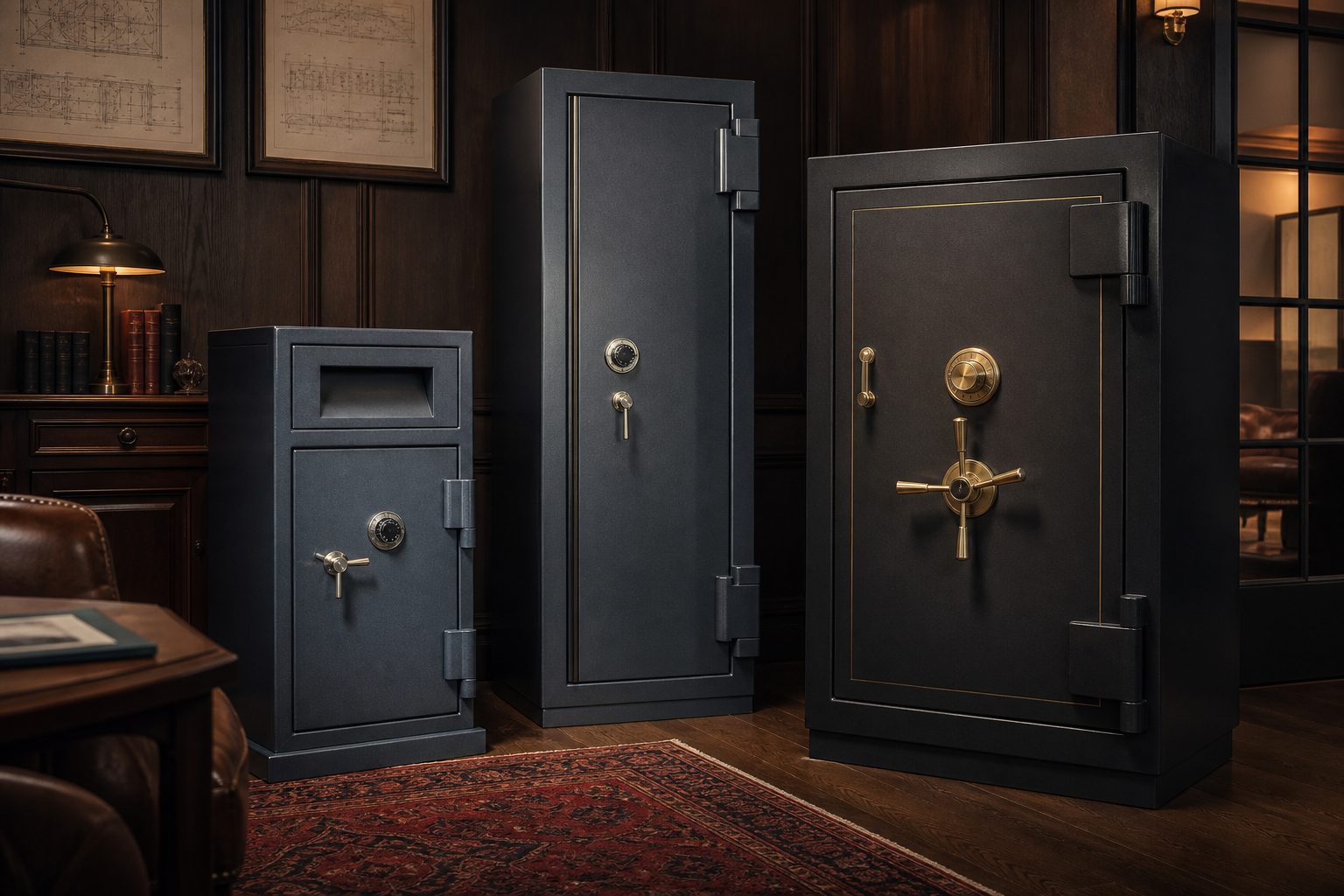
Most businesses buy a safe once and live with the decision for twenty years. It is worth an hour of thought, because the differences that matter are not the ones on the showroom floor.
Start with the threat, not the product
A safe is not a general-purpose security device. It is rated against a specific attack, for a specific length of time. Before looking at any model, answer three questions: what are you protecting, what is it worth to somebody else, and how long would an intruder realistically have undisturbed?
That last one governs everything. A jeweller in a strip mall with an alarm response time of fifteen minutes needs a different rating to a bank branch with a guard on site.
Understand what the UL ratings mean
Underwriters Laboratories tests safes by having experienced technicians attack them with tools. The rating describes how long they lasted, measured in net working time — time actually spent attacking, not elapsed time.
- RSC — Residential Security Container. Five minutes against basic hand tools. Adequate for a home, not for commercial cash.
- TL-15 — Fifteen minutes of tool attack on the door. A sensible commercial baseline.
- TL-30 — Thirty minutes on the door. Common insurer requirement for higher-value inventory.
- TL-30×6 — Thirty minutes on all six sides. Matters more than it sounds; many safes are far weaker from the back or base.
- TRTL-30×6 — Thirty minutes against tools and a cutting torch, all six sides.
A safe with no rating at all is a lockable steel box. That is sometimes fine. Just know which you are buying.
Fire and burglary are different problems
This is the single most common mistake we see. A fire rating tells you the interior stayed below a stated temperature for a stated period — typically 350°F for one or two hours, which is the point at which paper begins to char. It says nothing whatsoever about resisting attack.
Conversely, a heavy burglary safe with no insulation can cook its contents in a house fire. If you need both, buy something rated for both, and expect it to be larger and heavier than either alone.
Digital media needs different numbers
Drives, tapes and flash media are destroyed far below paper’s scorch point — often around 125°F with humidity control. A standard one-hour fire safe will happily protect your deeds while ruining every backup inside it. If you are storing media, you need a media-rated unit.
Ask your insurer before you buy, not after
Your carrier may specify a minimum rating for the coverage you want, and may require the safe to be anchored, alarmed, or both. Finding this out after installation is an expensive way to learn it. Get the requirement in writing first.
Then think about the boring parts
- Weight and floor loading. A TL-30 can exceed 2,000lb. Upper floors and older buildings need checking.
- Access speed. A dial is reliable and needs no batteries. An electronic keypad is faster and supports multiple users and audit trails. Time locks and time delays deter robbery but frustrate staff.
- Anchoring. An unanchored safe under 1,000lb can be removed whole and opened elsewhere at leisure.
- Service access. Who will open it when the lock fails? Because it will, eventually.
The question nobody asks
Who services it? Equipment like this has a working life measured in decades, and it will need a technician at some point. Buying from someone who can also open it, repair it and move it is worth considerably more than a small discount from someone who cannot.
Not sure where you stand?
We have been specifying and servicing this equipment since 1905. A phone call costs nothing.