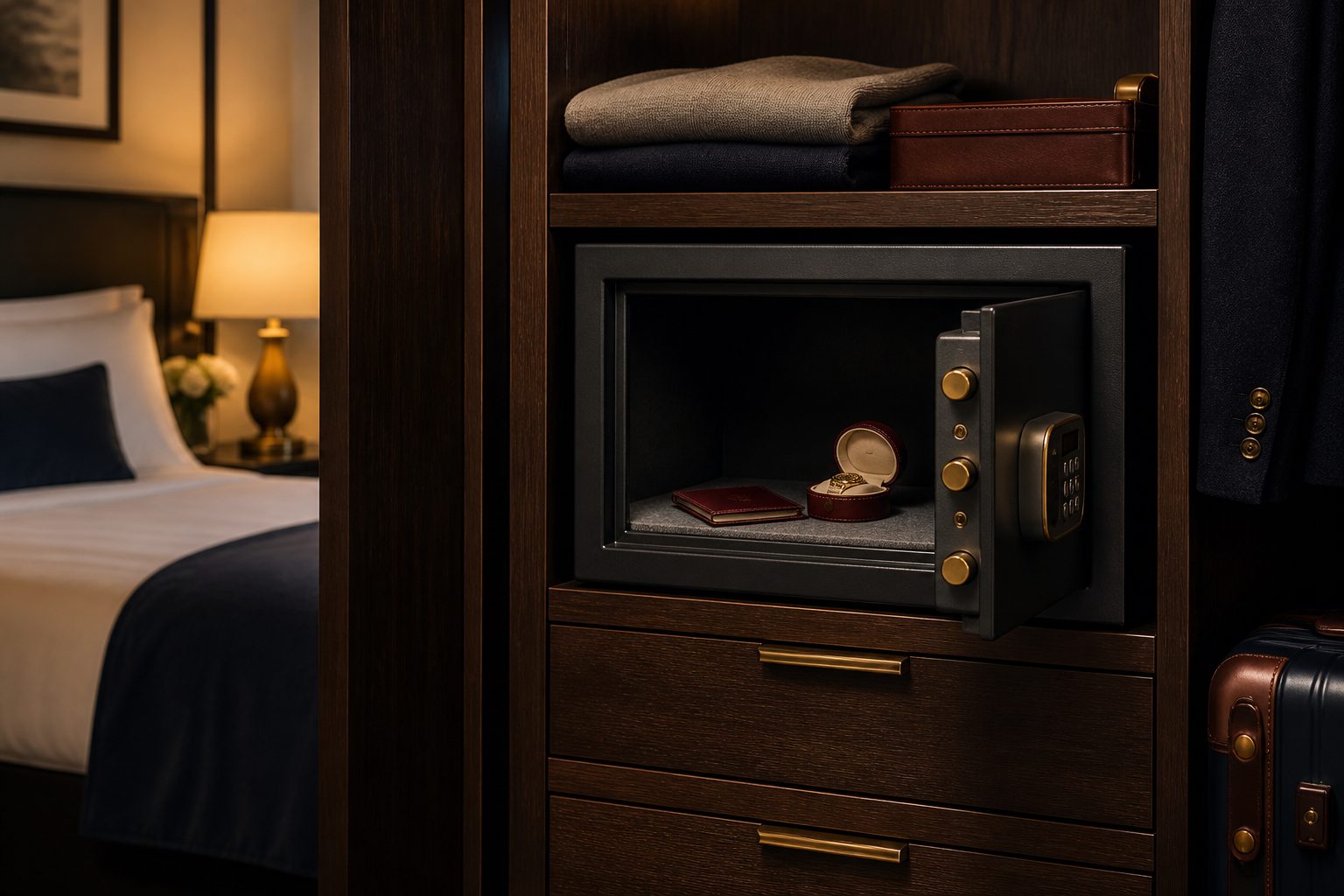
An in-room safe is a promise. Most guests never test it, and the small number who do are usually testing it at the worst possible moment — after something has gone missing.
The default-code problem
The single most common weakness in hotel safes is not the steel. It is that many units ship with a factory override code, that code is widely published, and a great many properties never change it.
If your maintenance team can open every safe in the building with one four-digit sequence they learned on day one, so can anyone who has worked there, and anyone they told. Change the override codes, control who holds them, and log their use.
Audit trails are the point
When a guest reports a loss, the question is always the same: who opened this safe and when? A unit with an audit trail answers it in seconds and either clears your staff or identifies the problem. A unit without one leaves you with an unresolvable dispute and an unhappy guest.
Insist on audit capability. It protects your team far more often than it catches them.
Size for what guests actually carry
The classic complaint is that a laptop will not fit. Modern travellers arrive with a 14-inch laptop, a tablet, a camera and a passport wallet. A safe that takes none of them will be reported as broken, ignored, or resented. Measure against real devices, not the brochure.
Fixing and placement
- Anchor every unit. An unbolted in-room safe is a portable box containing exactly the valuables somebody wants.
- Mount at a sensible height. Wardrobe-floor units are awkward for older guests and non-compliant in accessible rooms.
- Provide accessible-height units in ADA rooms. This is a requirement, not a nicety.
- Think about power. Battery units fail quietly; hardwired units fail in a power cut. Know which failure mode you are choosing and have an override plan.
Say what it is worth
Most jurisdictions limit hotel liability for guest property, often conditional on providing a safe and posting notice. The limit is usually far below what a guest assumes. Make the notice clear and offer front-desk deposit for genuinely high-value items — that is what a proper safe deposit facility is for.
And service them
In-room safes take more abuse than any other safe in the industry: wrong codes, forced handles, spills, and a new occupant every night. They need a maintenance schedule. Most properties discover this only when a guest is locked out at 6am before a flight.
Not sure where you stand?
We have been specifying and servicing this equipment since 1905. A phone call costs nothing.