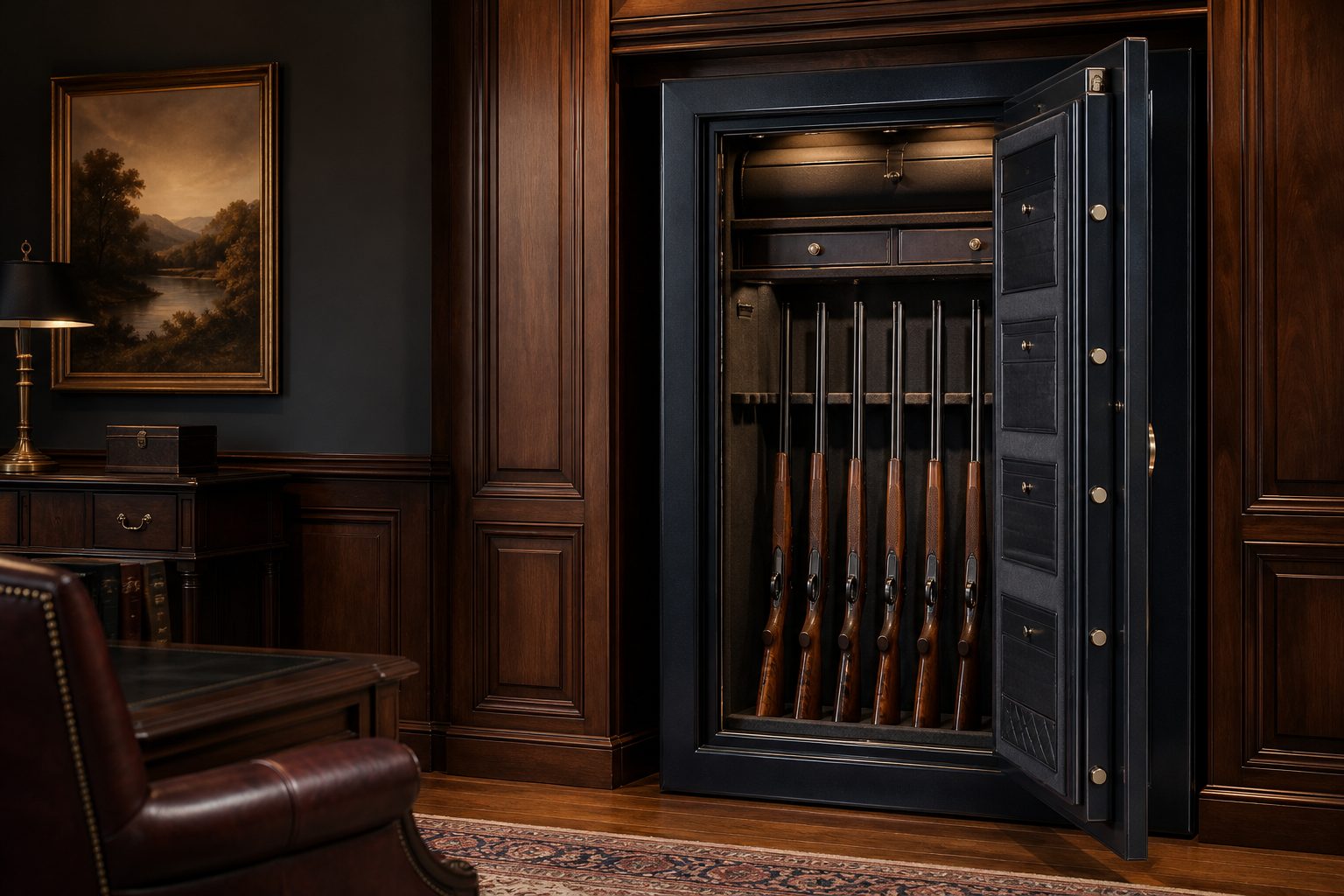
A gun safe is doing two jobs at once, and they pull in opposite directions. It has to keep firearms away from children, visitors and thieves. It also has to let the owner reach one quickly. Almost every decision is a trade between those two things.
Decide which job dominates
A collection stored long-term is a security problem: heavier steel, better rating, anchored, ideally not in an obvious room. A single home-defense firearm is an access problem: small, biometric or keypad, within reach, opening in under two seconds.
Trying to make one safe do both usually produces something that does neither especially well. Many households are better served by two.
Steel gauge matters more than the brochure implies
Body steel is where manufacturers economise, because buyers look at doors. A thick door on a 14-gauge body is a safe you can open with a fire axe through the side. Twelve gauge is a reasonable floor; ten gauge or heavier is meaningfully better.
Look for the body specification, not just the door thickness. If it is not published, that is itself informative.
Locks
- Mechanical dial. Extremely reliable, no batteries, decades of service. Slow, and awkward in the dark.
- Electronic keypad. Fast, multi-user, often with audit trail. Needs batteries and will eventually need the keypad replaced.
- Biometric. Fastest access by a wide margin. Quality varies enormously — a cheap sensor that fails wet or cold is worse than useless. Always confirm there is a reliable backup method.
Fire rating, honestly
Most gun safes advertise a fire rating. Read the fine print: many are manufacturer-claimed rather than independently tested, and the test conditions vary. If fire protection genuinely matters to you — and for ammunition and documents stored alongside, it should — look for an independently verified rating.
Buy larger than you need
Every safe owner we have ever met filled theirs. Rifle capacity figures assume optics-free guns packed tightly, which nobody actually does; halve the advertised number for a realistic estimate. Then add room, because collections grow.
Anchoring is not optional
A 500lb safe sounds immovable. Two people with a hand truck disagree. Bolt it to the slab or the structure. An unanchored gun safe is a container that helpfully gathers every firearm in the house into one carryable box.
And think about humidity
A sealed steel box in a basement is a rust chamber. A dehumidifier rod or desiccant is a few dollars and will save your finishes. Ask us to include one at installation.
Not sure where you stand?
We have been specifying and servicing this equipment since 1905. A phone call costs nothing.